The Sabot Approach™
The Sabot Approach™ is a philosophy of learning and teaching that sees children as capable, curious, and resourceful.
In relationship with their teachers, children build knowledge through a hands-on, inquiry-based process. Inspired by the educational principles of Reggio Emilia, the Sabot Approach promotes investigation, reflection, and creative expression that foster critical thinking and the development of essential skills.
The Sabot Approach is brought to life through
six interconnected tenets that guide how we understand children, how teachers design and facilitate learning, and how we partner with families and the broader community.
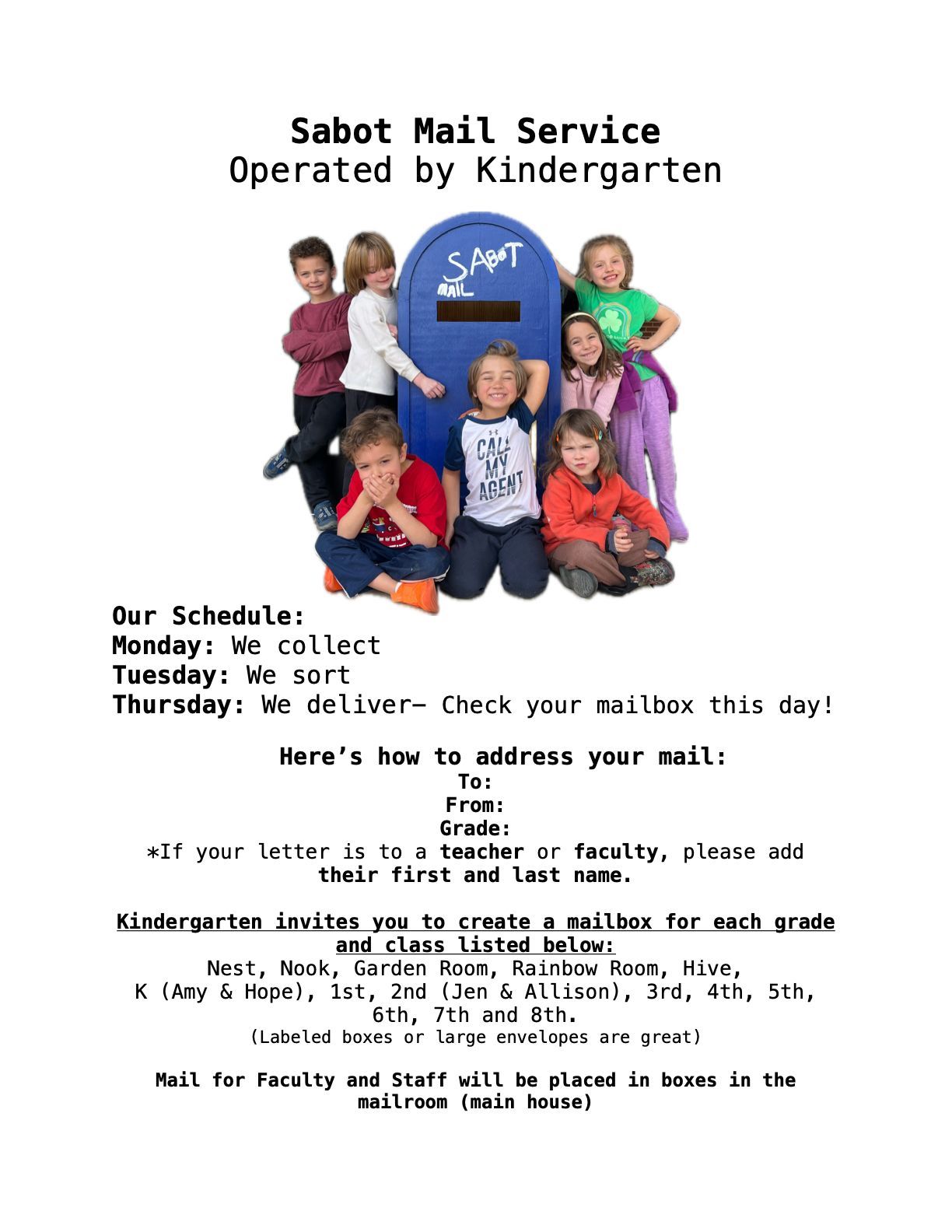
Read about the Kindergarten Mail Service
One day, a student in Kindergarten wondered how mail gets from sender to receiver. That single inquiry sparked a school-wide movement: Kindergarten designed a working mail system, complete with routes, jobs, schedules, and even advertisements.
It caught on quickly: classes built mailboxes and letters began flying. Early childhood students wrote letters to their middle school reading buddies, and friends reached across classrooms to connect.
It's a living example of The Sabot Approach: inquiry as the driver of joyful learning, one question turning into real collaboration and real literacy, across every grade.
The Six Tenets of The Sabot Approach:
Tenet 1: Inquiry as the driver of joyful learning
Children’s questions and interests spark meaningful exploration that guides authentic investigations to build deep understanding and strong academic foundations.
Tenet 2: Teachers as collaborators and researchers
Educators listen and observe to intentionally craft meaningful experiences that balance children’s exploration, direct instruction, and discovery to extend thinking, strengthen essential knowledge and skills, and inspire curiosity.
Tenet 3: Thinking made visible to extend learning
Through ongoing documentation and dialogue, children revisit ideas, make connections, and see their own thinking evolve.
Tenet 4: Learning environments as “third teachers”
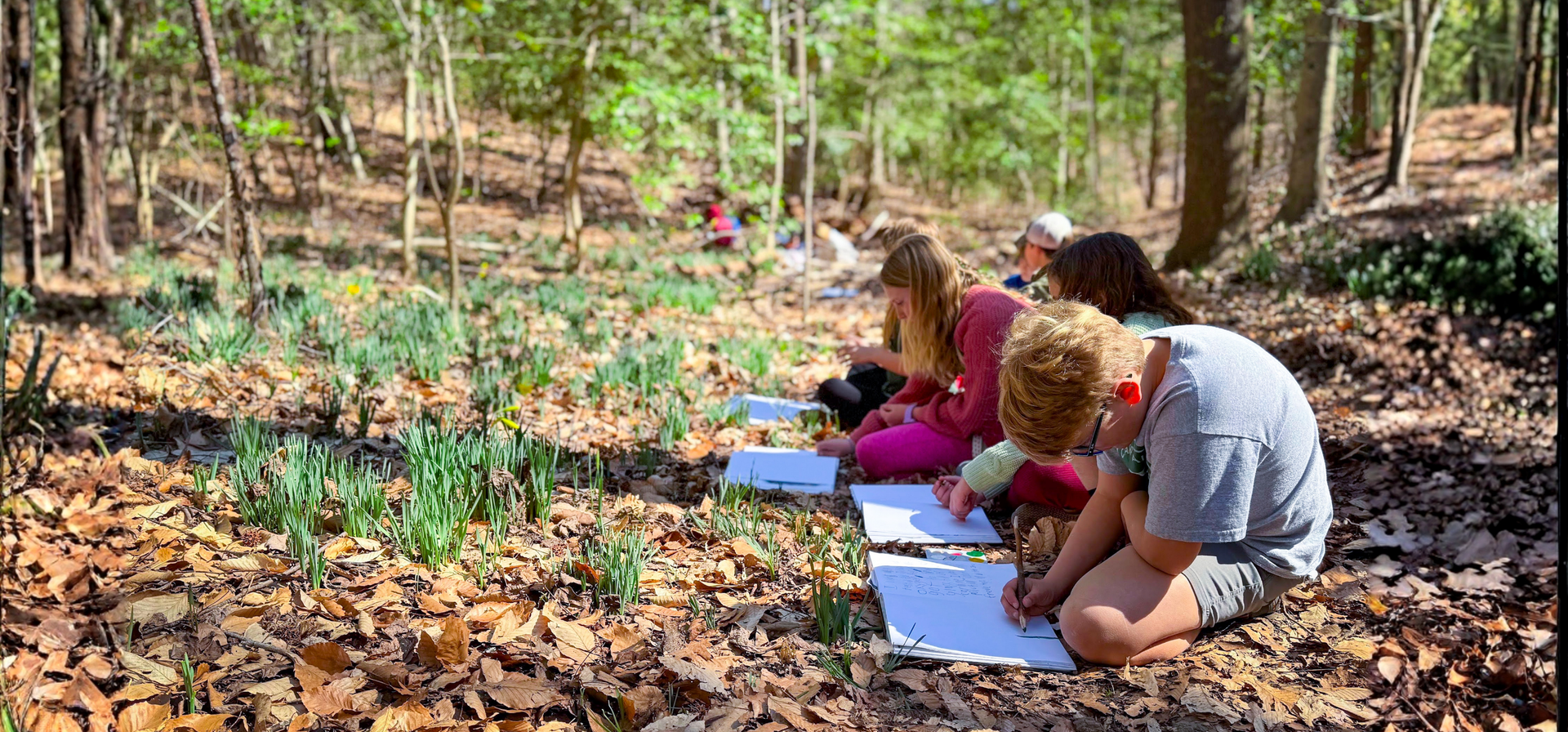
Spaces are intentionally designed to spark creativity, foster collaboration, invite multiple perspectives, and nurturechildren’s connection with the natural world.
Tenet 5: Community as a learning partner
Families, peers, and the broader world are engaged as essential voices in a shared learning process.
Tenet 6: Equity and belonging as foundational
By nurturing identity, offering multiple ways to express their voice, and fostering inclusion, children are supported in developing empathy, agency, and a sense of responsibility to one another and the world.